A degree gets you in the door. What happens after that, how you handle pressure, work with a team, or speak up when it matters, comes down to a different set of skills entirely.
On September 13, MustardSeed welcomed back Selestine Njoga, who joined us in 2024 for a session on communication, for a much broader training this time: Soft Skills & Career Life.
The session spanned five topics, mental health, emotional intelligence, teamwork, critical thinking, and communication, all grounded in the everyday reality of studying, job hunting, and early career life. This blog will highlight the key lessons learnt during the session.
Mental health as a foundation
Selestine opened with a simple fact: performance is capped by capacity. You can’t communicate well, work well with others, or think clearly running on empty.
She used WHO guidance on mental health at work to walk the mentees through how strain shows up in study and work life, and why support is a shared responsibility rather than one person’s job. She emphasized the need to know how to communicate respectfully with someone who seems to be struggling.
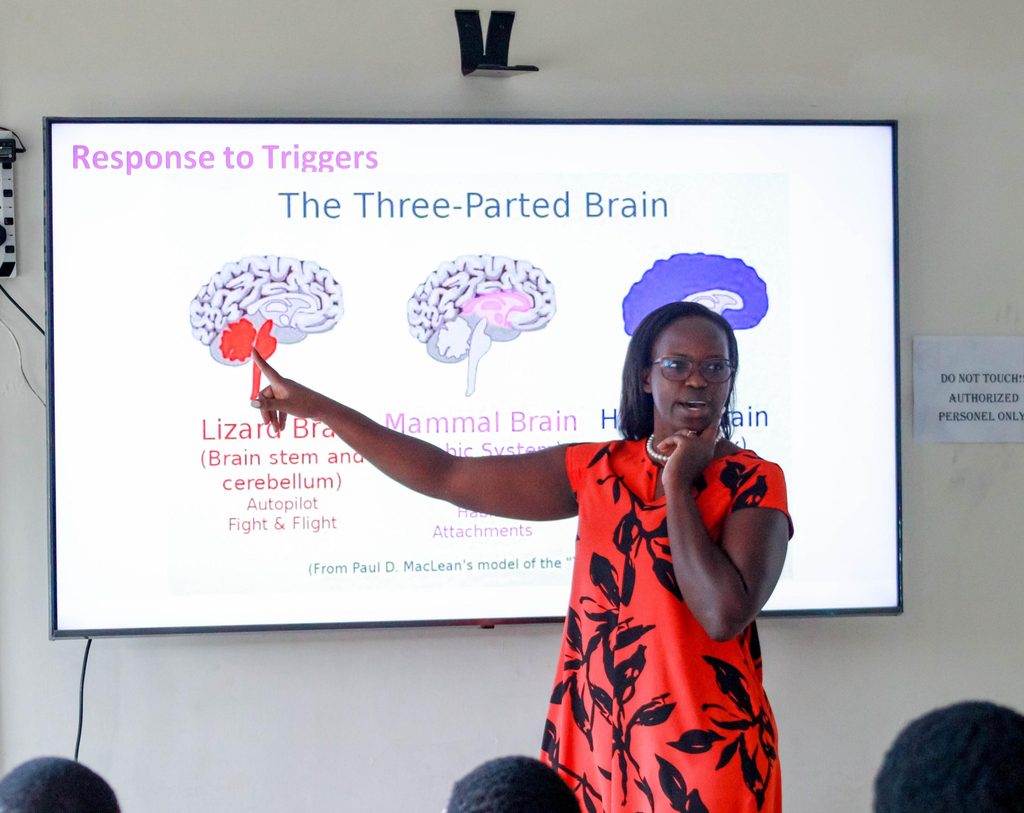
Emotional intelligence, beyond the buzzword
Selestine broke emotional intelligence into four working parts, self-awareness, self-management, social awareness, and relationship management, then had participants practice pausing before reacting to real triggers: rejection, criticism, conflict.
“Intelligence gets you hired, emotional skill gets you promoted, and integrity is what keeps you trusted once you’re there.” She taught.
Teamwork that actually works
For teamwork, she offered less of a pep talk and more of a working system.
Shared purpose, clear roles, working agreements, trust, coordination, and accountability are the needed ingredients for team success.
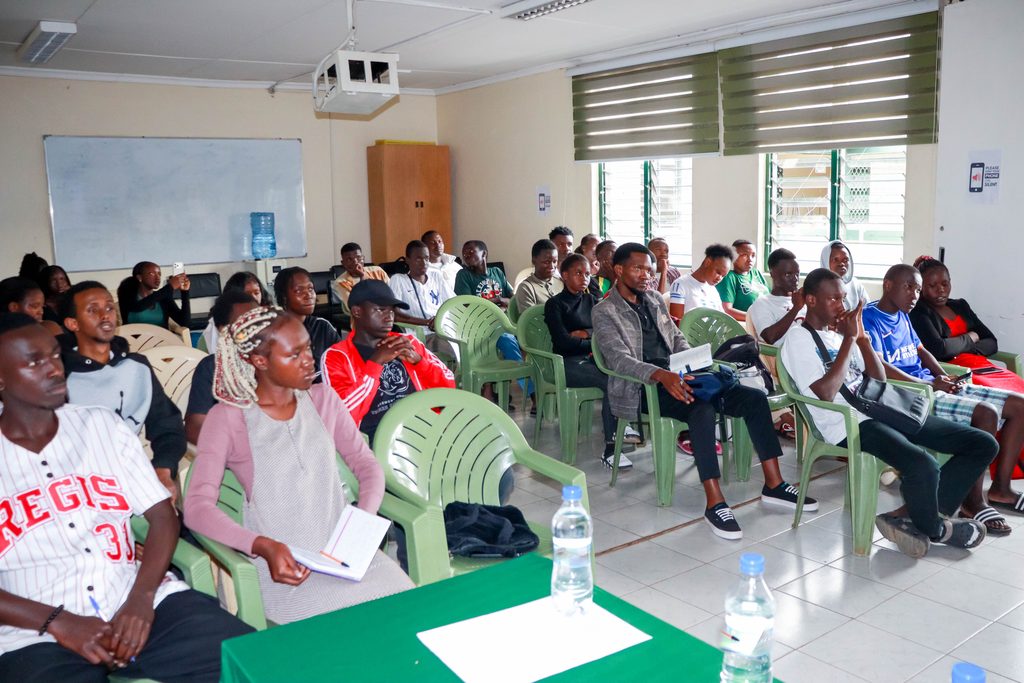
Critical thinking, not a personality trait
The fourth subtopic treated critical thinking as a discipline, not something you either have or don’t. Define the problem, diagnose the real cause, generate options, evaluate them, then act and review.
A clear, repeatable path.
Selestine also named the traps that derail good thinking such as confirmation bias, urgency bias, and jumping to a fix before the problem is even properly defined, skills employers are increasingly screening for directly.
Communication that lands
The final subtopic returned to familiar territory for Selestine. She framed communication as a loop, purpose, audience, message, channel, listening, and closure, and closed with practice on giving direct, specific feedback without making it personal.
Closing the loop
Selestine ended with a short personal action plan––one habit to drop, one to start, one relationship to strengthen, one agreement to bring back to a team. She also left participants a shortlist of Kenyan job platforms worth bookmarking, including LinkedIn Jobs Kenya, CampusBiz Careers, BrighterMonday, and MyJobMag.
We’re grateful to Selestine for coming back to invest in our mentees again, with a session that covered a lot of ground without ever feeling like a lecture.